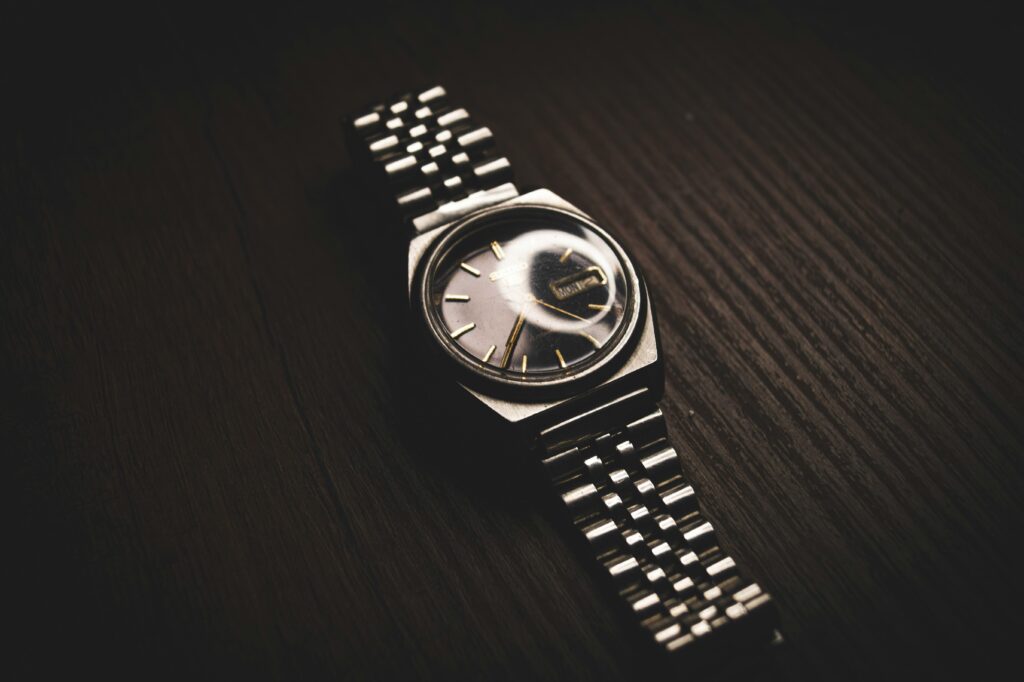
This Seiko Credor buying guide covers the strangest value story in Japanese watchmaking: a luxury line whose new flagships cost as much as a house deposit, while genuinely excellent used examples sell on Yahoo Auctions Japan for a few hundred dollars. If you have ever seen a $50,000 Credor mentioned in the same breath as a $300 eBay listing and wondered what is going on, this guide untangles it — and shows you how to buy the good ones before the rest of the world catches on.
Short answer: This Seiko Credor buying guide can be summarized in one line: Credor is Seiko’s Japan-market luxury and artistic-craft line, founded in 1974. It spans four very different tiers, from affordable vintage quartz dress watches to hand-built Spring Drive grails. The confusion exists because most guides only cover the top tier. The used bottom tiers are one of the best-kept secrets in the Japanese used market — and with Credor stepping onto the international stage, that window may not stay open forever.
What Is Credor? The Third Pillar of Seiko
Most collectors know Seiko and Grand Seiko. Credor is the third arm — and until very recently it barely acknowledged the outside world. The brand’s website was Japanese-only for decades, and even today the English catalog shows only a small fraction of the full Japanese lineup. Nearly everything Credor has made since 1974 was sold in Japan, to Japanese customers, through Japanese retailers.
That history is exactly why a Seiko Credor buying guide has to be a Japan-market guide. The supply never left the country. When a vintage Credor shows up on a Western dealer site, it almost always came out of the Japanese secondary market first — with a margin added on the way — the same Japan-to-West price spread that runs through every category we track.
A Two-Minute Credor History
Credor launched in 1974, at a moment when Seiko dominated global watchmaking volume but was boxed in by its own reputation for affordability. The quartz revolution Seiko had unleashed was hollowing out the traditional luxury market, and Credor was the in-house answer: take the group’s best movements, case them in precious metals with jewelry-grade finishing, and sell them to Japan’s booming executive class. The name itself signals the intent — it derives from the French crête d’or, or “golden crest.”
Through the 1980s and 90s, Credor became the default “success watch” of corporate Japan: thin, gold-accented quartz dress pieces worn with suits, sold in volumes that would surprise anyone who only knows the brand’s modern artisan image. That corporate-gift era is precisely why tier 1 supply is so deep today — those watches were bought by the tens of thousands, worn gently, and are now surfacing on the secondary market as estates are cleared. Understanding this history is half the value of a Seiko Credor buying guide: the flood of affordable examples is not a red flag, it is a demographic event.
Credor vs Grand Seiko: Two Different Axes, Not a Ladder
The lazy framing is “Credor sits above Grand Seiko” or “one step below Grand Seiko” — you will see both claims in forums, sometimes in the same thread. The accurate framing is that they compete on different axes. Grand Seiko’s identity is precision and restrained perfection. Credor’s identity is artistic craft: ultra-thin hand-wound movements, hand-engraved skeleton bridges, porcelain and lacquer dials, precious-metal cases in compact dress proportions.
Some Credor pieces cost several times more than top Grand Seikos; plenty of others cost far less. If you are mapping the Seiko family tree, our Grand Seiko vs Seiko and King Seiko vs Grand Seiko guides cover the other two rungs — Credor is best understood as the craft workshop beside that ladder rather than a rung on it.
Seiko Credor Buying Guide: The Four Tiers Explained
Here is the structure that resolves the “$50,000 brand with $300 watches” paradox. Treat every Credor listing as belonging to one of four tiers:
| Tier | What It Is | Used Availability |
|---|---|---|
| 1. Vintage quartz dress (1970s–90s) | Slim dress watches, often with solid-gold bezels or gold-capped cases on steel | Abundant in Japan; the affordable entry point |
| 2. Mechanical “baby Credor” | Compact automatics such as 4S-caliber references | Regular but thinner supply; modest premiums |
| 3. Modern high-grade quartz (8J era) | Ultra-thin, beautifully finished quartz — some around 6.5mm thick | Steady supply, still undervalued |
| 4. Artisan flagships | Eichi II, Spring Drive Sonnerie, ultra-thin skeletons, Goldfeather reissues | Rare, specialist-priced, collector territory |
The forum confusion — and the reason no Seiko Credor buying guide existed to resolve it — comes from comparing tier 4 headlines with tier 1 listings. Both are genuine Credor. They simply serve different customers — and tiers 1 through 3 are where the used-market opportunity lives.
Tier 1–3 Highlights: What to Actually Search For
On the affordable side, the vintage quartz dress pieces are the classic hunt: references from the 8N, 8J, 9300, and 2F families surface constantly on Japanese auctions, frequently with 18k gold bezels mated to steel cases. Prices for honest examples routinely undercut what the materials alone would suggest, because the brand is invisible to most international searchers.
The 8J-caliber generation deserves special mention in any Seiko Credor buying guide: these are high-grade quartz movements in remarkably thin cases, with dial and case finishing far above what the price implies. Owners consistently describe them as the best-kept sleeper buy in the Seiko family. The mechanical “baby Credor” 4S references add an automatic movement in similar compact proportions for buyers who want a mechanical heartbeat.
At the top, the artisan tier is the brand’s public face: the Eichi II with its hand-painted porcelain dial and Spring Drive caliber, the hand-wound 7R31 Spring Drive pieces derived from Grand Seiko’s 9R31, ultra-thin hand-engraved skeletons in solid gold, and the revived Goldfeather line. These are wonderful — and they are not what this guide expects you to bid on next week.
Condition Checks Specific to Credor
Credor’s dress-watch DNA creates its own checklist, different from the tool-watch checks that dominate most buying advice:
- Solid gold vs gold-capped vs plated. Many affordable references mix a solid 18k bezel with a steel case; others are gold-capped or plated. Plating wear on case edges and lug tops is the most common flaw on tier 1 watches. Listing photos of the case flanks matter more than dial shots.
- Size reality. Credor dress watches run small — many men’s references sit in the 33–36mm range, and ladies’ models can be as small as 24mm. Japanese listings usually state case width without lugs; confirm the measurement rather than assuming modern sizing. If compact watches are a feature for you rather than a bug, our small-wrists roundup explains why Japan is the right hunting ground.
- Dead batteries. A large share of auction listings are “not working” simply because the battery died years ago. That is normal and usually harmless — but price the risk, because occasionally the real problem is a corroded movement.
- Originality. Crowns, crystals, and bracelets get swapped over 40 years. The same originality-first discipline from our condition grading guide applies here, and Japanese sellers’ grading vocabulary translates directly.
Why Now: Credor Is Finally Going International
For fifty years Credor ignored the export market. That era is ending: the brand has begun expanding its English-language presence and is exhibiting at Watches and Wonders 2026 — its first appearance at the industry’s biggest international stage. Attention follows exhibition halls, and prices follow attention.
Vintage and used Credor is still priced like a secret. If the brand’s international push lands the way King Seiko’s revival did, today’s tier 1–3 prices will look like the good old days. That is not a promise of appreciation — watch prices never move in straight lines — but the asymmetry favors buying while the audience is still small.
Where to Buy Used Credor from Japan
The buying half of this Seiko Credor buying guide is short, because the supply concentrates in three places. Yahoo Auctions Japan has the deepest pool, especially for tier 1 vintage quartz; search クレドール alongside “Credor” to surface listings that English searches miss. Mercari Japan adds fixed-price finds, and the established used-watch dealers we profiled in our guide to Japanese watch stores online — Komehyo and its peers — carry graded examples at slightly higher but safer prices.
Auction tactics for Credor differ slightly from mainstream Seiko hunting. Because international bidder competition is thin, aggressive sniping matters less than patience: comparable tier 1 pieces recur weekly, so let overpriced listings pass. Set saved searches for both クレドール and “Credor,” check the caseback and case-flank photos before anything else, and treat dealer-graded listings from the established shops as the calibration point for what auction examples should cost. The bidding mechanics themselves are covered in our Yahoo Auctions bidding strategy guide.
International buyers bid through a proxy service — ZenMarket, Buyee, or From Japan all handle watch purchases routinely, and our best proxy service for Japanese watches comparison covers which fits your buying style. Nothing about Credor changes the process; it only changes how few other bidders you are competing against.
FAQ: Seiko Credor Buying Guide Essentials
Is Credor better than Grand Seiko? Wrong question — they optimize for different things. Grand Seiko for precision and consistency, Credor for artistic craft and ultra-thin dress watchmaking. At the flagship level Credor prices can exceed Grand Seiko’s; at the used entry level Credor is dramatically cheaper.
Why are used Credor watches so cheap? Tiny international brand awareness, quartz-era snobbery, and small case sizes that fell out of fashion — all three headwinds are weakening as dress watches and compact sizing come back.
Are the cheap ones real Credor? Almost always, yes. Credor is not a heavily faked brand — counterfeiters chase recognizable logos. Standard authenticity discipline still applies, but the risk profile is nothing like the fake problem around famous models.
Do Credor watches use Seiko movements? Yes — Credor calibers are made within the Seiko group, including some of its most exotic work: ultra-thin hand-wound movements under 2mm tall and hand-decorated Spring Drive calibers exclusive to the line.
What about servicing? Tier 1–3 quartz pieces are inexpensive to keep alive — battery changes and eventual circuit-or-coil work that any competent watchmaker can handle, with movements shared across the Seiko group. The exotic tier is the opposite: ultra-thin hand-wound and Spring Drive calibers should only go back through Seiko’s own service channels, so factor that into a grail purchase.
Verdict: The Best-Kept Secret in the Seiko Family
Every Seiko Credor buying guide should end with the same honest summary: this is Japan’s quietest luxury line, and the quiet is the opportunity. Learn the four tiers, apply the dress-watch condition checks, search in Japanese, and buy from the Japanese market where the supply actually lives. Whether that means a $400 gold-bezel quartz sleeper or a lifetime-grail Eichi II, you will be buying from the source — ahead of the crowd that Watches and Wonders is about to introduce to the brand.
For deeper background on the brand’s positioning and current catalog, Time+Tide’s explainer on what Credor is and why it matters is the best English-language overview, and Chrono24’s Credor listings give a live read on international asking prices to compare against Japanese auction results.