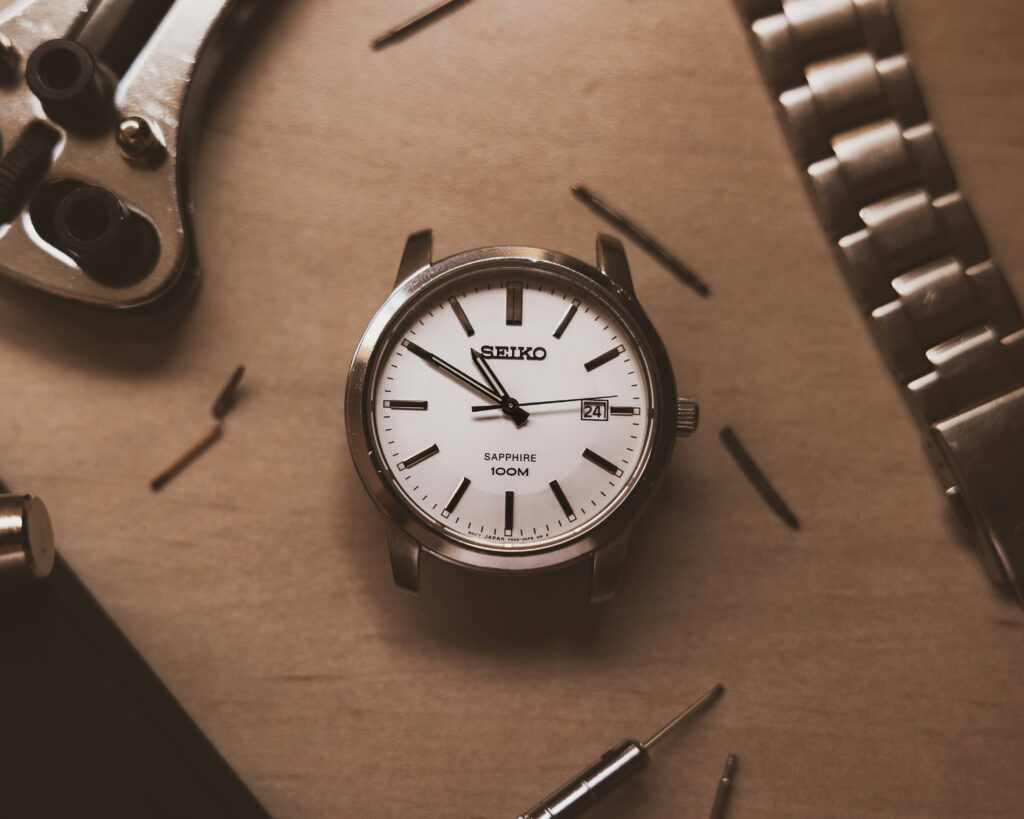
Understanding Japanese watch condition grades is the single most valuable skill you can develop before buying a used timepiece from Japan sight-unseen. When you can’t hold a watch in your hands, the seller’s condition rating becomes your eyes—and Japanese sellers happen to grade more honestly and more conservatively than almost anyone else in the world. A watch labeled “B” in Tokyo often looks better than a “near-mint” listing on a Western marketplace.
The catch is that Japanese watch condition grades are not a single, standardized system. Auction dealers, resale chains, Mercari, and individual Yahoo Auctions sellers each use slightly different letters, symbols, and Japanese phrases. This guide decodes every major grade from N (brand new) down to J (junk), explains the six-tier Mercari system, translates the essential condition vocabulary, and tells you which grade actually offers the best value for an international buyer in 2026.
Why Japanese Watch Condition Grades Matter More Than You Think
Japan is the world’s largest secondhand luxury market for a reason: trust. Resale shops survive on repeat customers, and a single mis-graded item can damage years of reputation. That reputation-first culture, combined with strict consumer-protection norms, means sellers tend to under-grade rather than over-grade. It is the opposite of the optimistic “excellent condition!” you often see elsewhere. That trust extends to the very top of the market: even high-end JDM lines like Credor routinely surface with honest, conservative grades, as we cover in our Seiko Credor buying guide.
That trust is exactly why so many collectors start their search in Japan in the first place. If you are still deciding what to hunt for, our guide to the best Japanese watches to buy used pairs well with the grading system below.
For you, this conservative grading is a genuine advantage. Once you learn to read Japanese watch condition grades correctly, you can confidently bid on a “B”-rank Seiko or a “AB”-rank Grand Seiko knowing the real-world condition will usually meet or exceed the label. But the flip side matters too: because there is no legal standard forcing every seller to use the same scale, you must know which system you are looking at before you trust the letter attached to it.
The Japanese Watch Condition Grade Scale: From N to Junk
Most dealers, auction agents, and resale chains (Komehyo, Jackroad, and similar shops) use a letter-and-rank system loosely borrowed from Japan’s broader pre-owned luxury trade. Grades vary slightly from shop to shop, but the ladder below reflects the version you will encounter most often when buying watches.
| Rank | Japanese | Meaning | What to expect |
|---|---|---|---|
| N | 新品 (shinpin) | Brand new | Never worn; original box, tags, and warranty. Effectively store-fresh. |
| S | 未使用 (mishiyō) | Like new / mint | Unused or barely used. No visible wear; may lack tags or full papers. |
| A / SA | 極美品 (goku-bihin) | Excellent | Lightly used and meticulously kept. Only faint marks under close inspection. |
| AB | 美品 (bihin) | Very good | Light-to-moderate wear. Fully functional. Often the smartest value. |
| B | 中古 (chūko) | Good | Honest everyday wear—light scratches, some polishing. Runs fine. |
| C / BC | 難あり (nan-ari) | Fair | Clearly used. Noticeable scratches, dents, or a needed service. |
| J | ジャンク (janku) | Junk | Sold as-is. May not run. No returns. For parts or a project. |
Two things to remember. First, the exact letters shift between sellers—one shop’s “AB” is another shop’s “A2.” Always read the written description underneath the grade, because that is where the real detail lives. Second, a high rank describes cosmetic appearance, not mechanical health. A “S”-rank vintage automatic can still need a service, so cosmetic grade and running condition are two separate questions you should confirm individually. Our guide to servicing a used Seiko covers how to make that call — full overhaul, movement swap, or simply wear it as-is.
How Mercari Japan Grades Condition (6 Categories)
Mercari, Japan’s biggest flea-market app, ignores the dealer letter system entirely. Instead every listing must pick one of exactly six official condition categories. Because these are enforced by the platform, they are consistent across every seller—which makes Mercari one of the easiest places to start once you understand the labels.
- 新品、未使用 (shinpin, mishiyō) — New, unused. Purchased new, never used, ideally still boxed.
- 未使用に近い (mishiyō ni chikai) — Like new. Used only a handful of times with no real signs of wear.
- 目立った傷や汚れなし (medatatta kizu ya yogore nashi) — No noticeable scratches or stains. Light use, nothing that stands out.
- やや傷や汚れあり (yaya kizu ya yogore ari) — Some scratches or stains. Clearly used but well within normal.
- 傷や汚れあり (kizu ya yogore ari) — Scratches or stains present. Wear anyone would notice at a glance.
- 全体的に状態が悪い (zentai-teki ni jōtai ga warui) — Overall poor condition. The Mercari equivalent of junk.
For watches, the sweet spot is usually the middle two: “like new” and “no noticeable scratches.” Sellers still tend to under-rate, so a “some scratches” watch often photographs better than the label suggests. The one thing Mercari’s system does not tell you is whether the watch actually runs—so always check the written description for movement status. If you are new to the app, our step-by-step Mercari Japan watch buying guide walks through search filters and buying flow in detail.
Reading Condition on Yahoo Auctions Japan
Yahoo Auctions Japan is the wildest of the three worlds. Individual sellers write their own free-text condition descriptions, and while the platform offers optional condition tags similar to Mercari’s, many sellers skip them and simply describe the watch in prose. This is exactly where knowing your Japanese watch condition grades and vocabulary pays off, because machine translation frequently mangles the nuance — the same translation trap that hides a disclosed vintage Seiko redial when a seller honestly flags a refinished dial.
You will see a mix: dealer-style letter grades (S/A/B) from professional shops, Mercari-style tags from casual sellers, and plenty of listings that just say 中古 (used) followed by a paragraph of specifics. Professional auction shops are usually reliable; anonymous one-off sellers require more scrutiny. Because condition and authenticity go hand in hand, it’s worth pairing this with our guide on how to spot fake Seiko watches on Yahoo Auctions before you bid. For a broader walkthrough of decoding listings, see our Yahoo Auctions Japan English guide.
Essential Japanese Condition Terms Every Buyer Should Know
Grades tell you the headline; the description tells you the truth. These are the words that matter most when interpreting Japanese watch condition grades in a real listing. Memorize a handful and you will read Japanese watch listings far faster than any translation app can.
| Term | Romaji | Meaning |
|---|---|---|
| 美品 | bihin | “Beautiful item”—excellent cosmetic condition |
| 極美品 | goku-bihin | Extremely beautiful—near-mint |
| 稼働品 / 稼働中 | kadō-hin / kadō-chū | Running / currently keeping time |
| 動作確認済み | dōsa kakunin-zumi | Function tested and confirmed working |
| OH済み / オーバーホール済み | OH-zumi | Overhaul (full service) already done |
| 電池交換済み | denchi kōkan-zumi | Battery replaced (quartz watches) |
| 風防 | fūbō | The crystal (watch glass) |
| 傷 / 汚れ | kizu / yogore | Scratch / dirt or stain |
| 付属品 | fuzoku-hin | Accessories (box, papers, extra links) |
| 保証書 | hoshō-sho | Warranty card |
| 現状渡し | genjō-watashi | Sold strictly as-is |
| ジャンク / NCNR | janku / NCNR | Junk / No Claim, No Return |
The two most important words for a mechanical watch are 稼働 (kadō, “running”) and OH済み (overhauled). A cosmetically clean watch that is not confirmed running may need a service costing $150–$400, which can erase your bargain entirely. Treat “現状渡し” (as-is) and “NCNR” as firm warnings: you own whatever arrives.
Watch-Specific Red Flags That Grades Don’t Capture
Even a perfect cosmetic grade can hide problems that only matter for watches. Before you commit, scan the description and photos for these:
- No mention of running status. Silence about 稼働 or 動作 often means the watch is dead or the seller didn’t test it.
- Over-polished case. A suspiciously shiny vintage case may have lost its sharp edges and factory finish to buffing—cosmetically “clean” but less valuable to collectors.
- Stretched bracelet. Common on older Seiko and Citizen models; check for “ブレス伸び” (bracelet stretch) notes.
- Aftermarket or service parts. Replaced dials, hands, or bezels lower value even at a high grade. Look for 社外 (shagai, non-original) or リダン (redial).
- Moisture or fogging. Any hint of internal condensation signals failed seals and a likely service.
None of these show up in the letter grade, which is precisely why the written detail and clear photos outrank the headline rating every time.
Which Condition Grade Should You Actually Buy?
For most international buyers, the value ceiling and the value floor are both in the middle of the scale. Here is a practical way to think about it once you understand Japanese watch condition grades:
Condition is also the single biggest variable when you compare markets: our breakdown of used Seiko prices in Japan vs eBay shows how much a one-grade difference moves the final number once fees and shipping are included.
- N and S (new / mint): Pay a premium for collectibles or gifts, but for a daily wearer you’re overpaying for perfection you’ll scratch yourself.
- A and AB (excellent / very good): The genuine sweet spot. Sharp-looking, fully functional, and priced well below new. This is where seasoned buyers concentrate.
- B (good): Best raw value if you don’t mind honest wear. Japan’s conservative grading means a “B” is often more presentable than expected.
- C and J (fair / junk): Only for confident buyers with servicing budgets, parts hunters, or restoration projects. Never buy junk expecting a working watch.
If you’re buying your first watch from Japan, target A or AB from a professional shop, insist on confirmed running status, and check current market value on a reference like WatchCharts or Chrono24 before setting your maximum bid.
How Condition Grade Affects Price and Resale Value
Condition is the biggest single lever on price in the used-watch market, and Japanese watch condition grades map onto value in a fairly predictable way. As a rough rule of thumb for a popular reference like a Seiko diver or a Grand Seiko, each step down the ladder tends to shave a meaningful slice off the price—so the gap between an “S” and a “B” of the same model can be 30% or more.
That spread is where smart buyers make their money. Because Japan grades so conservatively, a “B”-rank watch bought at a “B”-rank price often presents like an “A” once it’s in your hands and lightly cleaned. If you ever plan to resell—especially into Western markets where the same watch would be listed as “excellent”—buying a strong “AB” or “B” from Japan and reselling abroad is a well-known arbitrage. Just remember that heavy polishing, replaced parts, or missing box and papers (付属品) all drag resale value down regardless of the cosmetic grade. Original, unpolished, and complete almost always beats shiny-but-modified when it comes time to sell.
Before you commit, sanity-check the asking price against completed sales for that exact reference and condition. A grade only means something relative to the price you pay for it.
Japanese Grades vs eBay and Western Grading
The headline difference is calibration. Because sellers under-grade, Japanese watch condition grades tend to run a full step stricter than Western equivalents—so a Japanese “B” frequently rivals an eBay “excellent,” and a Japanese “A” can shame listings marketed as “mint” elsewhere. That built-in conservatism is a large part of why buying from Japan is so attractive even after proxy fees and shipping.
The trade-off is process. Japanese platforms don’t sell directly to overseas buyers, so you’ll route purchases through a proxy service such as Buyee, Zenmarket, or From Japan, which handles translation, payment, and export. Their translation tools help, but they won’t reliably catch the nuance in a condition description—which is exactly why reading the grades yourself is worth the effort. Once you’ve won a watch, factor in international shipping and customs; our guide on shipping watches from Japan breaks those costs down.
How to Read Japanese Condition Ranks: Quick FAQ
What does SA rank mean on a Japanese watch?
SA rank (極美品, goku-bihin) means “excellent”—a lightly used piece kept in near-mint shape, with only faint marks visible under close inspection. It sits just below unused (S) and above very-good (AB), and it is often the sweet spot where you get an almost-new watch without paying the full unused premium.
What is the difference between A rank and SA rank?
Many Japanese sellers merge the two and list them as “A/SA,” but where they are split, SA is the cleaner grade—closer to mint, with fewer and fainter marks. Plain A rank still means excellent, just with slightly more visible everyday handling. Treat SA as “excellent-plus” and A as “solid excellent.”
What does AB rank mean?
AB rank (美品, bihin) is “very good”—light-to-moderate everyday wear, fully functional, with the honest marks you would expect from a used watch that was looked after. It is frequently the smartest value on the scale: noticeably cheaper than S or SA while still looking sharp on the wrist.
Is B rank worth buying?
B rank (中古, chūko) means “good”: real everyday wear—light scratches and some prior polishing—but a watch that runs fine. If you plan to wear it rather than collect it, B rank can be a genuine bargain, especially on tool watches where a few marks add character rather than subtract value.
How do I read Japanese condition ranks quickly?
Read the letter first as shorthand: N and S mean essentially unworn, SA and A mean excellent, AB and B mean good honest wear, and C or J mean flawed or sold as-is. Then confirm the letter against the seller’s photos and the running-status note (稼働, kadō = running), because a generous grade means nothing if the movement is dead.
Final Thoughts: Let the Grade Guide You, Not Decide for You
Mastering Japanese watch condition grades turns Japan’s used-watch market from intimidating to genuinely rewarding. Learn the dealer ladder from N to J, memorize Mercari’s six categories, keep a short glossary of terms like 美品 and 稼働 handy, and always read the written description before trusting the letter. Do that, and Japan’s famously honest grading works entirely in your favor.
Use the grade as your first filter, confirm running status as your second, and verify market value as your third. With those three habits, you can bid on a watch on the other side of the world with real confidence—and usually receive something even better than the label promised.