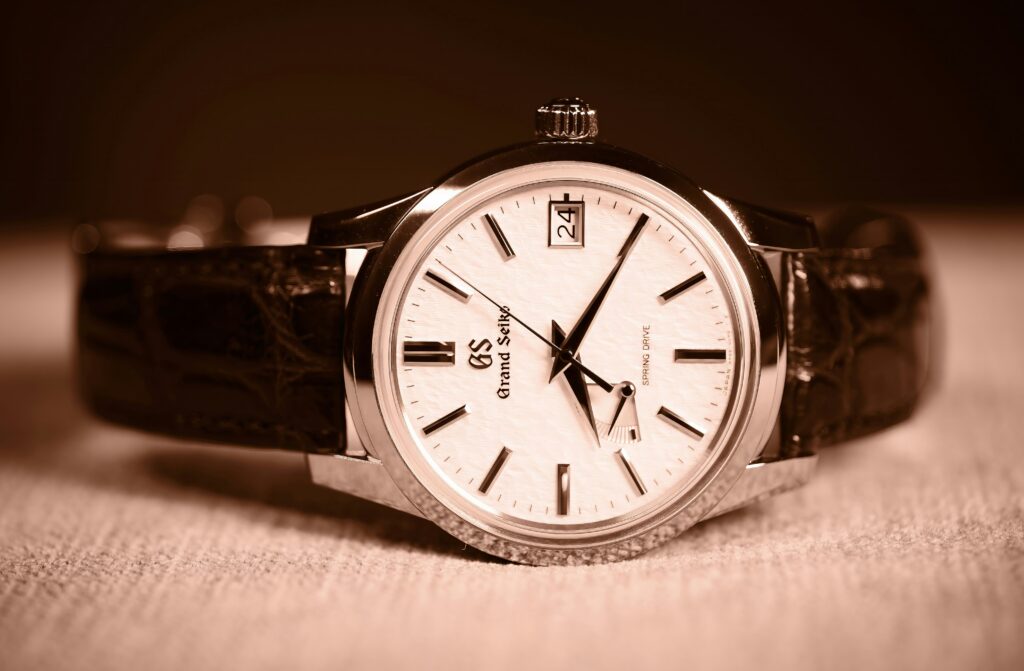
When looking at the Japanese domestic market (JDM) for watches, the debate of grand seiko vs seiko used is one of the most common dilemmas for international collectors. Both brands offer incredible value, but they cater to entirely different segments of the watch market. If you are planning to buy from Japan using proxy services, understanding the nuances between a used Grand Seiko and a used regular Seiko is crucial to making the right investment.
The Japanese used watch market is legendary for its condition standards and sheer volume of inventory. Whether you are browsing Yahoo Auctions Japan or Mercari, you will find thousands of listings for both brands. For a Grand Seiko specifically, a specialist dealer such as Ginza Rasin ships one to your door directly, no proxy required. But when it comes to grand seiko vs seiko used, which one actually offers the better value for your money?
In this comprehensive guide, we will break down the key differences in build quality, movement technology, depreciation, and buying strategies to help you decide which path is right for your collection.
1. Understanding the Core Difference: Grand Seiko vs Seiko Used
To understand the grand seiko vs seiko used debate, you first need to understand the relationship between the two brands. Historically, Grand Seiko was a sub-brand of Seiko, created in 1960 with a singular goal: to build the ideal watch that could compete with the finest Swiss timepieces in precision, durability, and beauty.
In 2017, Grand Seiko became a fully independent brand. While regular Seiko focuses on mass production, offering everything from affordable entry-level automatic watches (like the Seiko 5 series) to mid-tier luxury (like the Prospex and Presage lines), Grand Seiko is strictly high-end luxury.
When buying used, this distinction becomes even more apparent. A used Seiko might cost you anywhere from $50 to $1,500, while a used Grand Seiko typically starts around $1,200 for older quartz models and can easily exceed $5,000 for modern Spring Drive or Hi-Beat mechanical pieces.
2. Build Quality and Finishing: The Zaratsu Difference
When comparing grand seiko vs seiko used, the most immediate and striking difference is the finishing. Grand Seiko is famous for its “Zaratsu” polishing—a tin-plate polishing technique that creates a distortion-free, mirror-like surface on the case and hands.
Used Grand Seiko Finishing
Even on a used Grand Seiko that is 10 or 20 years old, the Zaratsu polishing often holds up remarkably well, provided the watch hasn’t been heavily abused or poorly polished by a third party. The dials are also a major selling point, featuring intricate textures (like the famous “Snowflake” or “Mt. Iwate” dials) and multi-faceted indices that catch the light beautifully.
Used Seiko Finishing
Regular Seiko watches, particularly in the Prospex and Presage lines, offer excellent finishing for their price point. However, they are mass-produced. You will not find the same level of obsessive, hand-applied detail. When buying a used Seiko, you might notice more typical wear and tear, as these are often treated as “beater” or daily-wear watches by their original Japanese owners — though the dressier end of the range is a different story, and our ranking of the best Seiko Presage models to buy used from Japan covers the references that come closest to Grand Seiko finishing.
3. Movement Technology: Spring Drive vs Automatic
The heart of the grand seiko vs seiko used comparison lies in the movements.
Grand Seiko Movements
Grand Seiko offers three main types of movements:
- 9F Spring Drive: A proprietary technology that combines the high torque of a mechanical watch with the high precision of a quartz watch, resulting in a perfectly smooth sweeping seconds hand.
- 9S Quartz: Arguably the best quartz movements in the world, accurate to +/- 10 seconds per year, and built to run for 50 years before needing a service.
- 9S Mechanical: High-beat and standard mechanical movements assembled and adjusted by hand to exceed Swiss chronometer standards.
Buying a used Grand Seiko with a Spring Drive movement is often the holy grail for collectors, as it offers technology you simply cannot get from any other brand.
Seiko Movements
Regular Seiko watches rely heavily on mass-produced automatic movements (like the 4R, 6R, and 8L series) and standard quartz, solar, and self-charging Kinetic movements. While robust and reliable, they do not offer the same level of horological prestige or accuracy as Grand Seiko. However, they are significantly cheaper and easier to service. We break down the overhaul-or-swap decision — and what each route costs — in our servicing a used Seiko guide.
4. Depreciation and Value Retention in Japan
If you are looking at grand seiko vs seiko used from an investment perspective, the Japanese domestic market offers unique dynamics.
Grand Seiko Value Retention
Grand Seiko watches generally experience a steep initial depreciation when bought new. This makes buying a used Grand Seiko an incredibly smart financial move. You can often find excellent condition, lightly used Grand Seiko models on Yahoo Auctions Japan for 30% to 50% off their original retail price. Once they hit the used market, their value tends to stabilize, making them a relatively safe place to park your money.
Seiko Value Retention
Regular Seiko watches, especially limited editions or discontinued models (like the SKX007 or the SARB033), can actually appreciate in value. However, standard production models depreciate heavily and stay cheap. If you are looking for a bargain, you can find fantastic used Seiko divers for under $300 using a proxy service like Buyee.
5. Servicing Costs: A Crucial Consideration
One often overlooked aspect of the grand seiko vs seiko used debate is the cost of ownership.
If you buy a used Grand Seiko, particularly a Spring Drive or a Hi-Beat mechanical, servicing must be done by Grand Seiko’s official service centers in Japan. A full overhaul can cost anywhere from $400 to $800 or more, and the turnaround time can be several months.
Conversely, almost any competent local watchmaker can service a standard used Seiko automatic movement (like a 4R36 or 6R15). Parts are plentiful and cheap, and a standard service might only cost $100 to $200.
6. How to Buy Used Grand Seiko and Seiko from Japan
Whether you decide on a Grand Seiko or a regular Seiko, the best deals are found directly in Japan. Since most Japanese sellers do not ship internationally, you will need to use a proxy service.
We highly recommend using Zenmarket or Buyee to browse Yahoo Auctions Japan and Mercari. These platforms allow you to bid on auctions or buy items outright, and they will consolidate your packages and ship them to your home country. For a full comparison of these two services, check out our Zenmarket vs Buyee guide.
When browsing, use these Japanese search terms:
- Grand Seiko: グランドセイコー
- Seiko: セイコー
- Used/Secondhand: 中古
Always check the seller’s feedback and look for listings that include the original box and papers (箱・保証書付き), as this significantly helps with resale value later.
7. The Verdict: Which Should You Buy?
So, in the battle of grand seiko vs seiko used, which is the smarter buy?
Buy a Used Grand Seiko if:
- You want world-class finishing that rivals Rolex or Omega.
- You are fascinated by unique movement technology like the Spring Drive.
- You have a budget of $1,500 to $5,000 and want the best possible value for a luxury watch.
- You appreciate “stealth wealth”—a watch that looks incredible to you but doesn’t draw unwanted attention.
Buy a Used Seiko if:
- You are on a tighter budget (under $1,000).
- You want a robust, reliable daily “beater” watch, particularly a dive watch.
- You want to avoid high servicing costs in the future.
- You are looking to collect discontinued JDM models that might appreciate in value.
8. Where to Find the Best Deals on Used Grand Seiko and Seiko
When you are ready to make a purchase, knowing where to look is just as important as knowing what to buy. The Japanese domestic market is vast, and different platforms cater to different types of buyers.
Yahoo Auctions Japan
This is the undisputed king of the used watch market in Japan. It operates similarly to eBay but is entirely domestic. You will find everything from vintage 1960s Grand Seikos to modern Prospex divers. The sheer volume of listings means you can often score incredible deals, especially on auctions that end at odd hours or have poorly written titles. However, you must use a proxy service like Buyee or Zenmarket to bid, and you need to be comfortable assessing condition from photos alone.
Mercari Japan
Mercari is a flea market app where individuals sell directly to other individuals at fixed prices. It is excellent for finding “buy it now” deals on both Grand Seiko and regular Seiko models. Sellers on Mercari are often regular people rather than professional dealers, which means prices can sometimes be lower than market value if the seller just wants a quick sale. Again, a proxy service is required for international buyers.
Professional Dealers (Chrono24, eLADY, Komehyo)
If you prefer a safer route with guaranteed authenticity and professional grading, buying from established Japanese dealers is the way to go. Many of these dealers list their inventory on Chrono24 or have their own international websites — our guide to buying from Japanese watch stores online covers which stores ship overseas and how to reach the domestic-only ones. While you might pay a slight premium compared to Yahoo Auctions, the peace of mind—especially when spending thousands on a used Grand Seiko—is often worth it. It also pays to know that Grand Seiko’s five-year worldwide warranty can transfer to you on a used piece — see how a Japanese watch warranty works for international buyers before you commit.
9. Final Thoughts on the Grand Seiko vs Seiko Used Debate
The decision between a used Grand Seiko and a used regular Seiko ultimately comes down to your personal collecting philosophy and budget.
If you view watches as functional tools and enjoy the thrill of hunting for discontinued models or affordable divers, the regular Seiko market is a playground of endless possibilities. The low cost of entry and cheap servicing make it an incredibly accessible hobby.
On the other hand, if you appreciate the finer details of horology—the perfect sweep of a Spring Drive seconds hand, the flawless reflection of Zaratsu polishing, and the meticulous craftsmanship of a dial—a used Grand Seiko offers unparalleled value. It allows you to own a true luxury timepiece that competes with the best of Switzerland, often for a fraction of the price. Curious how King Seiko measures up on exactly these points? Our King Seiko vs Grand Seiko comparison covers the finishing and movement gap in detail.
Whichever route you choose, the Japanese used market is the best place to start your journey. By leveraging proxy services and doing your homework, you can add a stunning piece of Japanese watchmaking history to your collection. And if a dress watch is closer to your taste than either, the overlooked third door is Credor — our Seiko Credor buying guide explains Seiko’s hidden luxury line and its anomaly-level used prices.