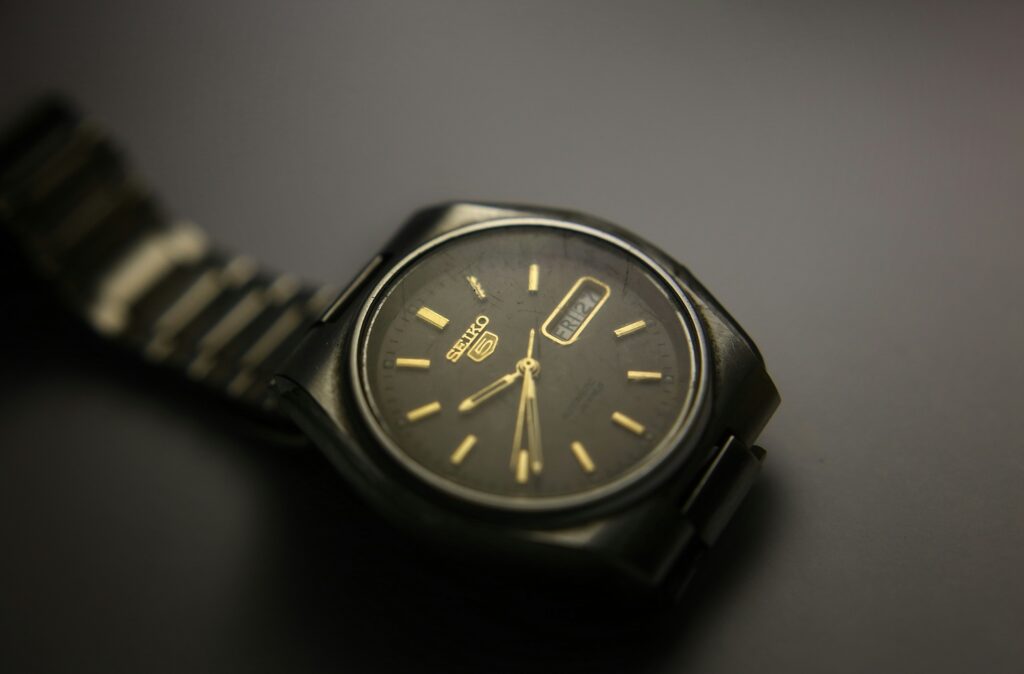
This Komehyo watch buying guide is for international buyers who keep seeing Komehyo listings pop up while hunting for a used Japanese watch and want to know whether it is a safe, sensible place to buy from abroad. Komehyo is one of Japan’s largest and oldest secondhand chains, and its watch business is one of the most trusted in the country. But buying from it as an overseas customer is very different from bidding on Yahoo Auctions or scrolling Mercari, and getting the details wrong can cost you money or leave you stranded at checkout.
The short version: Komehyo is a professional reseller, not a marketplace of strangers. That single fact shapes everything about how you buy, what you pay, and how much risk you carry. This Komehyo watch buying guide walks through what the chain actually is, how its two online storefronts differ, how to read its condition grades, and how to get a watch shipped to your door when the main site refuses your card.
What Komehyo Actually Is (and Isn’t)
Komehyo is a reuse retailer founded in Nagoya back in 1947, and today it runs roughly fifty-plus stores across Japan along with a large online operation. It buys secondhand goods directly from the public, has in-house appraisers authenticate and grade each item, then resells it under the Komehyo name with a consistent standard behind it.
This is the crucial distinction. On Rakuten, Yahoo Auctions, or Mercari, you are buying from independent sellers, and quality control lives with each individual shop or person. Komehyo owns the whole chain: it inspected the watch, it set the grade, and it stands behind the sale. If you have read our Rakuten Japan watch buying guide, think of Komehyo as the opposite structure — one accountable retailer instead of a marketplace of thousands.
That structure is why people trust it. Komehyo sells everything from Birkin bags to Rolex, but for our purposes it carries a deep bench of domestic watches — Seiko, Citizen, Casio — alongside luxury Swiss pieces. The appraisal-and-grade model is the same whether the watch costs two hundred dollars or twenty thousand.
Why This Komehyo Watch Buying Guide Leads with Authentication
Most guides open with prices. This Komehyo watch buying guide opens with authentication because that is the single reason to choose Komehyo over a cheaper auction. On a C2C platform, you are your own authenticator; the burden of spotting a redial, a franken-watch, or a swapped movement falls entirely on you. That is a skill worth building — our guide to spotting fake Seiko on Yahoo Auctions exists precisely because the risk is real.
Komehyo removes most of that burden. Their appraisers check authenticity before an item ever hits the shelf, and their grading is applied by trained staff rather than an optimistic private seller. You are paying a premium for that work, and whether the premium is worth it depends entirely on what you are buying and how confident you are on your own. Collectors who buy from the chain regularly compare notes on community forums like Watchuseek, which is a good gut-check before a bigger purchase.
The Two Komehyo Front Doors: Japan Site vs KOMEHYO USA
Here is the detail that trips up nearly every first-time buyer, and where accuracy matters most. Komehyo has two separate online storefronts, and they are not the same shop with different languages — they carry different inventory.
The Japanese site (komehyo.jp) is the deep one. It is updated almost daily, lists watches across every store in the chain, and is where the JDM Seiko, Citizen, and Casio depth actually lives. The catch: it ships within Japan only and generally expects Japanese payment methods, so an overseas card and address will not clear checkout on their own.
KOMEHYO USA (a separate English-facing storefront) does ship internationally and takes foreign cards, but its selection skews toward luxury handbags and high-end Swiss watches. If you are hunting an affordable domestic Seiko or a specific JDM reference, the US site will usually disappoint you. The rule of thumb: the US storefront is convenient but shallow on Japanese watches; the Japan site is deep but domestic-only.
Komehyo’s Grading System, Decoded
Komehyo grades every watch on a consistent internal scale, running from brand-new down through a series of lettered used grades that describe cosmetic condition. You will see labels like a top “new” tier, then A, AB, B, and lower grades as wear increases. Because the exact letters and definitions get revised over time, treat any specific chart you find online as a starting point and confirm the current scale on the listing itself.
What matters is that the scale is applied by the same organization every time, which makes it far more reliable than a private seller’s “mint!!” description. It pairs naturally with our breakdown of Japanese watch condition grades, since Komehyo’s letters map roughly onto the same vocabulary used across the wider Japanese secondhand market.
One caveat specific to watches: a cosmetic grade tells you about the case and dial, not the movement’s service history. A B-grade automatic can run beautifully and an A-grade one can be overdue for a service. Read the listing notes, and factor a possible overhaul into your budget on anything mechanical.
What You’ll Actually Find on Komehyo
Komehyo’s watch floors carry around fifty brands, spanning domestic and international. On the Japanese side you get genuine JDM depth, and for the purposes of this Komehyo watch buying guide that is where the real value hides: Seiko across Presage, Prospex, and vintage lines, plus Citizen, Casio, Orient, and the occasional Grand Seiko or Credor. The chain’s watch floors are one of the better physical hunting grounds for undervalued domestic pieces — the same reason our Seiko Credor buying guide points collectors toward stores like this.
Pricing sits above raw auction levels. You are paying for authentication, a clean grade, and often a shop warranty, so a Komehyo listing will rarely be the cheapest copy of a given reference online. Whether that gap is fair is a value judgment — our comparison of used Seiko prices in Japan versus eBay gives you a baseline to sanity-check any Komehyo price against, and a global reference like Chrono24 helps you see where a listing sits against worldwide asking prices.
The Shipping and Payment Wall (Why You Often Need a Proxy)
The Japanese Komehyo site is where the good watches are, and it is also where overseas buyers hit a wall: domestic-only shipping and Japanese payment methods. There are three realistic ways around it.
First, Komehyo’s own international checkout partner (WorldShoppingBIZ) can handle some overseas orders directly from the Japan site. Second, and most common in the watch world, is a proxy buying service that orders on your behalf, receives the watch at its Japanese warehouse, and forwards it internationally. Services like Buyee, From Japan, and ZenMarket all handle store orders like this, and our roundup of the best proxy service for Japan watches compares them head to head.
A proxy adds a service fee and a second shipping leg, but it unlocks the full komehyo.jp catalog with a foreign card. If you are new to proxies, our Buyee watch buying guide walks through the exact flow. Note that store perks like points or coupons generally do not pass through to proxy buyers, so budget on the sticker price plus fees rather than any loyalty discount.
How to Buy: A Step-by-Step Komehyo Watch Buying Guide
Here is the practical sequence this Komehyo watch buying guide recommends for an overseas purchase from the Japanese site:
- Find the watch on komehyo.jp. Use the English toggle, filter by brand, and note the store location shown on the listing — inventory is spread across physical shops.
- Read the grade and the notes. Confirm the condition letter, check for movement or service comments, and look at every photo at full size.
- Cross-check the price. Compare against recent sold data before you commit; a graded retailer should cost more than an auction, but not wildly more.
- Pick your route in. Use WorldShoppingBIZ if it is offered on that listing, or hand the URL to a proxy service.
- Pay the two stages. With a proxy you typically pay the item cost first, then international shipping once the watch reaches the warehouse.
- Plan for customs. Import duty and tax are your responsibility on arrival — our guide to shipping watches from Japan covers what to expect.
Komehyo vs Auctions vs Marketplaces
The clearest way to see where Komehyo fits is side by side with the two other main ways to buy a watch from Japan. This Komehyo watch buying guide keeps returning to one contrast, because each channel optimizes for something different.
| Factor | Komehyo (reseller) | Rakuten (dealer marketplace) | Yahoo Auctions (C2C) |
|---|---|---|---|
| Who you buy from | One accountable retailer | Independent pro dealers | Private sellers |
| Authentication | In-house, consistent | Per-shop, usually strong | Your job entirely |
| Pricing | Fixed, premium | Fixed, varies by shop | Bid-driven, often lowest |
| Condition grading | Standardized letters | Per-shop standards | Seller’s own words |
| Best for | Peace of mind | Curated dealer stock | Bargain hunting |
If bidding is more your speed, our walkthrough on how to buy watches on Yahoo Auctions Japan covers that end of the spectrum. Komehyo sits firmly at the safe, fixed-price end.
When Komehyo Is the Right Call — and When It Isn’t
Komehyo makes the most sense when the downside of a bad buy is large: a higher-value piece, a reference that is often faked, or simply a situation where you would rather pay more than gamble. Its authentication and grading are worth real money in those cases, and the fixed price means no bidding war.
It makes less sense when you are chasing the absolute lowest price on a cheap, easy-to-verify watch. A basic Seiko 5 that any enthusiast can authenticate on sight will almost always be cheaper at auction, and the retailer premium buys you little there. Match the tool to the watch — that judgment is the whole game.
Buying Komehyo In Person: Stores and Duty-Free
If you happen to be in Japan, buying at a physical Komehyo is the easiest path of all — no proxy, no shipping wall. You can inspect the watch in hand, and most Komehyo stores offer tax-free purchasing for tourists who meet the conditions, which shaves the consumption tax off the price. Flagship watch floors in Tokyo, Nagoya, and Osaka carry the deepest selection.
Buying in person also lets you compare Komehyo against the dedicated watch dealers nearby, many of which we cover in our roundup of Japanese watch stores worth knowing. Komehyo’s strength is breadth and a trusted name; specialist dealers sometimes beat it on a specific niche.
Frequently Asked Questions
A few questions come up in almost every Komehyo watch buying guide conversation, so here are the short answers.
Is Komehyo safe for international buyers? Yes. As a large, established reseller with in-house authentication, it is one of the lower-risk ways to buy a used watch from Japan — the main hurdle is logistics, not trust.
Can I buy directly from komehyo.jp with a foreign card? Usually not on your own; the Japanese site is domestic-focused. You go through their WorldShoppingBIZ partner or a proxy service such as Buyee or From Japan.
Are Komehyo watches serviced before sale? Not necessarily. A grade describes cosmetic condition, not the movement. Budget for a possible service on mechanical pieces and read the listing notes.
Does Komehyo offer any warranty? Many items carry a shop guarantee, but terms vary by product and change over time — confirm on the specific listing before buying.
Final Thoughts
Treat this Komehyo watch buying guide as a framework for one core decision: are you buying certainty or buying cheap? Komehyo sells certainty. Its appraisers, consistent grades, and accountable retail model make it one of the safest doors into the Japanese used-watch market, and for higher-value or often-faked references that safety is well worth the premium. Just go in clear-eyed about the two storefronts, the shipping wall, and the proxy fees, and you will get exactly what you came for.