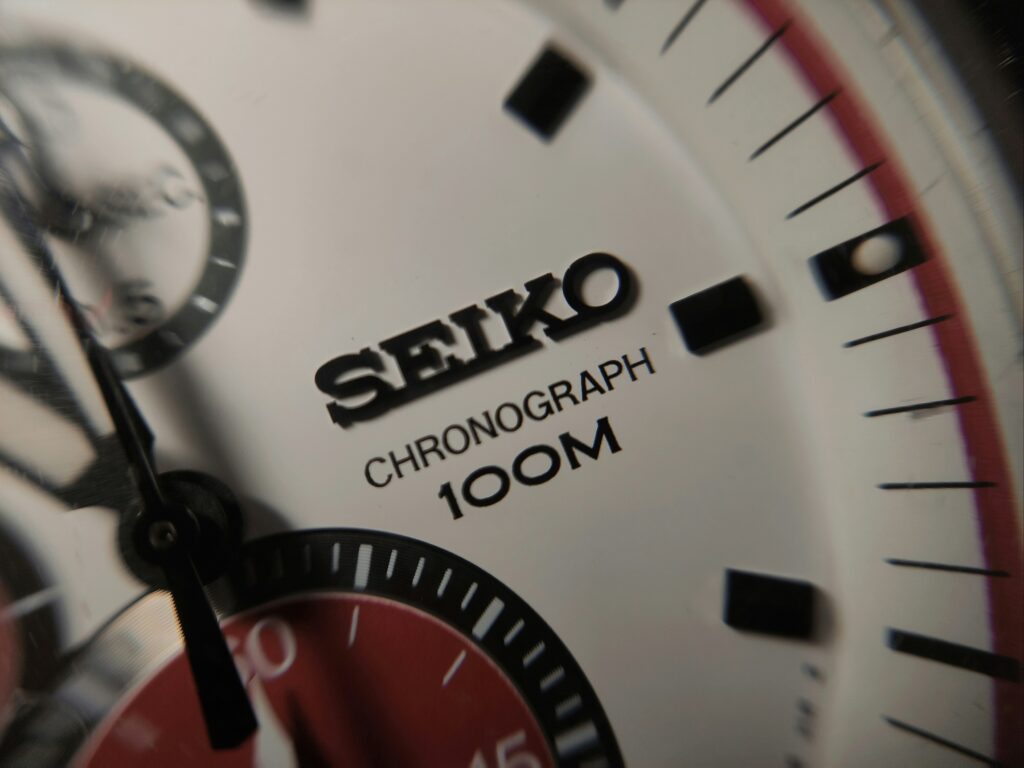
Hunting for the best Seiko chronograph used Japan has to offer is one of the most rewarding projects in watch collecting. Japan’s domestic market is overflowing with vintage Seiko chronographs — the legendary 6139 “Pogue,” the twin-register 6138 “Bullhead” and “Panda,” quirky quartz icons from the 1980s, and modern Prospex Speedtimers that are already becoming collectible. Prices in Japan are frequently lower than on Western marketplaces, and the sheer volume of listings means you can be picky about condition.
But vintage Seiko chronographs are also a minefield. Aftermarket bezels, swapped hands, redialed faces, and half-dead movements are everywhere, and sellers do not always know (or say) what they are selling. This guide covers the models worth buying, the originality checks that separate an honest watch from a parts-bin special, and exactly where to find the best Seiko chronograph used Japan listings without getting burned.
Why Japan Is the Best Place to Buy a Used Seiko Chronograph
Seiko sold these watches in enormous numbers at home, so decades later the supply still sits in Japanese drawers, estate sales, and secondhand shops. That supply flows onto Yahoo Auctions Japan and Mercari Japan daily, which keeps prices honest. A vintage chronograph that a Western dealer marks up heavily often sells in Japan for a fraction of that — we ran the numbers on this pattern in our Japan vs eBay price comparison.
There is a second, less obvious advantage: condition culture. Japanese sellers tend to describe flaws in detail and grade honestly, using a fairly consistent vocabulary we decoded in our guide to Japanese watch condition grades. For a mechanical chronograph — where a single dead pusher can mean an expensive repair — that transparency matters more than it does for a simple three-hander.
Best Seiko Chronograph Used Japan: Quick Picks
Before we go model by model, here is the short list. Every watch below appears constantly on the Japanese secondhand market, which is exactly what makes hunting for the best Seiko chronograph used Japan listings so productive.
| Model | Era | Type | Best For |
|---|---|---|---|
| Seiko 6139 (“Pogue” family) | 1969–1970s | Automatic, single register | History and icon status |
| Seiko 6138 (Bullhead, Panda, UFO) | 1970s | Automatic, twin register | Classic 70s design |
| Seiko 7A28 | 1980s | Quartz, analog | First analog quartz chrono |
| Seiko 7T32 / 7T-series | 1990s | Quartz with alarm | Budget daily wearer |
| Prospex Speedtimer SSC (solar) | 2021–present | Solar quartz | Modern reliability, panda looks |
| Prospex Speedtimer SRQ (8R46) | 2021–present | Automatic | Modern mechanical flagship |
Seiko 6139: The Pogue and the First Automatic Chronograph Family
The 6139 is the reason collectors take vintage Seiko chronographs seriously. Released in 1969, it landed in the same historic year as the Zenith El Primero and the Chronomatic Caliber 11, and Seiko points out it was the first automatic chronograph to combine a column wheel with a vertical clutch — architecture that high-end Swiss chronographs still use today. If there is one candidate for the best Seiko chronograph used Japan collectors chase hardest, this is it.
The star is the yellow-dial “Pogue,” named after astronaut Colonel William Pogue, who wore his personally purchased Seiko during the Skylab 4 mission in 1973. When photos of the watch in orbit surfaced decades later, prices jumped and an aftermarket parts industry sprang up almost overnight — which is why originality checks (covered below) matter so much on this reference.
One detail most listings get wrong: because Colonel Pogue bought his watch in the United States, it would have been a US-market 6139-6005 or 6139-6009, not the 6139-6002 that rest-of-world collectors usually call “the Pogue.” All of them share the same cushion case and Pepsi-style tachymeter bezel, so in practice any yellow-dial 6139-600x scratches the itch — but knowing the market codes helps you read casebacks and spot mismatched dials.
The 6139 runs a single 30-minute counter rather than the triple-register layout many buyers expect. Some collectors see that as a limitation; others love the clean dial it allows. Expect day-date at 3 o’clock and an internal rotating bezel on many variants — test that the inner bezel actually turns, because seized ones are common.
Seiko 6138: Bullhead, Panda, and the Twin-Register Classics
If you want two subdials and maximum 1970s attitude, the 6138 family is the pick. The famous nicknames are all here: the 6138-0040 “Bullhead” with its crown and pushers at the top of the case, the 6138-8020 “Panda” with its white-dial-black-subdial layout, the 6138-0011 “UFO” with its huge rounded case, and the 6138-0030 “Kakume” with its squared subdials.
The 6138 movement is essentially a 6139 with an added 12-hour register, so the same robustness — and the same parts-swapping culture — applies. Japanese auctions regularly surface 6138s in barn-find condition at low prices; whether that is a bargain or a money pit depends entirely on the originality checks later in this guide.
Quartz Icons: The 7A28 and the 7T-Series
Not every great used Seiko chronograph is mechanical. The 7A28, launched in 1983, is widely recognized as the world’s first analog quartz chronograph movement, and it did it with style: all-metal gears, adjustable and serviceable construction, and case designs including the Giugiaro-designed model that appeared on screen in the film Aliens. Japanese listings are the best place on earth to find honest 7A28s, often from single-owner collections.
A step down in price, the 7T32 and 7T-series quartz chronographs of the 1990s are everywhere in Japan and cost very little. They are not investment pieces, but as durable daily wearers with alarm complications they are one of the best value plays in the entire used Seiko catalog. They are also a low-risk way to practice evaluating listings before you chase a four-figure Pogue.
Modern Value: Prospex Speedtimer SSC and SRQ
In 2021 Seiko revived the Speedtimer name to honor the 6139 lineage. The line splits in two: solar quartz SSC models in a 39mm case with sapphire crystal, and mechanical SRQ models running the modern 8R46 automatic chronograph caliber at a much higher price point.
Here is the opportunity for used buyers: the beloved panda-dial SSC813 — nicknamed the “Seitona” for its Daytona-adjacent looks — has been replaced in the current lineup by newer colorways. Discontinued modern Seikos flow onto the Japanese secondhand market quickly and in volume, usually with boxes and papers. If you missed the SSC813 at retail, a lightly used example is now the smart way in — and a strong contender for the best Seiko chronograph used Japan shoppers can buy without taking on vintage risk. The same logic applies to early SRQ references.
Modern pieces also sidestep most originality worries, making them the easiest recommendation for a first-time importer. If you are choosing between a Speedtimer and a diver for your first Japan purchase, our roundup of the best used Seiko divers from Japan makes a good comparison read.
Originality and Condition: What to Check Before You Bid
Originality is what separates the best Seiko chronograph used Japan auctions can deliver from an expensive mistake. Vintage models are where the problems concentrate. The Pogue price spike created a flood of aftermarket bezels, hands, crystals, and dials, and many watches on the market today are honest-looking composites. Here is the checklist we use:
- Bezel insert: Aftermarket 6139 bezels are extremely common. Compare font weight and color against known-original examples in community references before bidding.
- Hands: Wrong or repainted hands are the second most common swap. Check the chronograph hand’s counterweight shape and the lume color against the dial’s lume.
- Dial: Repainted dials destroy collector value. Our guide to spotting a vintage Seiko redial covers the printing and font tells in detail.
- Inner rotating bezel: On 6139s, confirm the internal bezel turns via the second crown. Seized mechanisms are a known weak point.
- Moisture history: Look for dial spotting, rust on hands, and corrosion at the case opening. These movements survive a lot, but water damage is the killer.
Then come the chronograph-specific mechanical checks. Ask the seller (or check photos and video) for three things: the chronograph starts, stops, and resets crisply; the seconds hand resets exactly to zero; and the minute counter actually advances. A chronograph that “runs” but resets to 5 seconds past zero needs service. Mushy or stuck pushers usually mean dried lubricants at best and corrosion at worst.
Fakes are a smaller problem for Seiko chronographs than franken-watches are, but they exist — our guide to fake Seikos on Yahoo Auctions explains the seller red flags that apply to any listing.
Where to Buy and What to Pay
The deepest supply of the best Seiko chronograph used Japan listings is on Yahoo Auctions Japan, followed by Mercari Japan for fixed-price listings. Neither platform ships internationally or supports foreign accounts directly, so most overseas buyers go through a proxy such as Buyee, ZenMarket, or From Japan — we compared all of them in our guide to the best proxy service for buying watches from Japan.
On price, treat every figure as a snapshot: vintage chronograph values move with collector demand, condition, and originality. As a rough orientation, honest 7T-series quartz pieces sell for pocket money, 7A28s and common 6138/6139 variants occupy the middle ground, and clean, all-original Pogues and rare 6138 references command serious collector prices. Before bidding, cross-check completed Japanese auction results against international asking prices on Chrono24 so you know what your ceiling should be.
For deep model research before you commit, the collector community has done the homework: the long-running 6139 buying guide thread on Watchuseek documents original parts, variants, and known pitfalls reference by reference.
Servicing and Ownership Costs
Budget for a service on any vintage chronograph purchase. The 6139 and 6138 are robust, but parts are no longer made, donor movements are the usual repair path, and some watchmakers decline chronograph work outright. A full overhaul on a vintage chrono typically costs more than one on a time-only watch — sometimes more than a cheap watch itself cost you.
That is not a reason to avoid them; it is a reason to buy the best example you can find and to price the service into your bid. Our guide to servicing a used Seiko covers realistic costs, service intervals, and how to find a watchmaker who will take on vintage calibers.
Frequently Asked Questions
Is the Seiko Pogue a good investment?
All-original examples have appreciated over the long term, but the aftermarket-parts problem means condition and originality determine value far more than the reference itself. Buy one because you love it; treat any appreciation as a bonus.
What is the best Seiko chronograph used Japan buyers should start with?
For a first purchase, a discontinued Prospex Speedtimer SSC or a clean 7A28 offers the least risk: modern (or serviceable quartz) mechanics, minimal originality worries, and abundant Japanese supply.
Are vintage Seiko chronographs waterproof?
Treat every vintage example as not water resistant, regardless of what the dial says. Decades-old gaskets do not seal, and moisture is the number one killer of these movements.
Why are there so many 6139s with wrong parts?
When the Pogue’s spaceflight history became widely known, prices spiked and an aftermarket parts network appeared to meet demand. Many watches were “restored” with those parts and now circulate as composites.
Final Verdict
The best Seiko chronograph used Japan can offer you depends on your risk tolerance. If you want history on your wrist and are willing to do the originality homework, hunt a 6139 Pogue or a 6138 Bullhead. If you want maximum style per dollar with minimal risk, a 7A28 or a discontinued Speedtimer SSC from the Japanese secondhand market is nearly impossible to beat.
Whichever way you go, the playbook is the same: learn the condition grade vocabulary, run the originality checklist, verify the chronograph functions before you bid, and buy through a reputable proxy. Do that, and Japan’s used market will hand you a chronograph — and a story — that Western marketplaces simply cannot match at the price.